|
|

  
Programmes
for:
|
|

Focus on Diarrhoea,
Dehydration & Rehydration

Mother and Child Nutrition
& Malnutrition |
|

|
| |
Resources for Mother and Child Nutrition
Home >
Resources > Resources for Mother and Child Nutrition
In order to provide more comprehensive and meaningful search results on
our site, several reports
are available for viewing and download directly from this web site. Kindly visit the main
sites of the author organisations for more complete and updated information.
We acknowledge our gratitude to the many people and sources whose work
has been drawn freely upon. We thank them all.
|

Mother-Child Nutrition Mission, Maharashtra -
V Ramani
Rajmata Jijau Mother-Child Health & Nutrition Mission, Aurangabad,
Maharashtra, India
Presentation:
flash
778 kb |
powerpoint
2.2 mb
 |
Breast Crawl
Initiation of Breastfeeding by Breast Crawl
visit
breastcrawl.org for video and complete dossier.
UNICEF, WHO and WABA along with the scientific community strongly
recommend initiating breastfeeding within an hour of birth.
Evidence shows that early initiation can prevent 22% of all deaths
among babies below one month in developing countries.
Every newborn, when placed on the mother’s abdomen, soon after
birth, has the ability to find its mother’s breast all on its own and
to decide when to take the first breastfeed. This is called the
‘Breast Crawl’.
This method is evidence based and has been field tested by us. A
documentary on the ‘Breast Crawl’ has been prepared for training,
advocacy and for wider dissemination. The video has created a very
high level of sensitivity among all the levels of functionaries and
was officially endorsed by senior policy makers as the right approach
for initiating breastfeeding. This dossier provides the background and
a scientific overview to the documentary.
Initiation of breastfeeding by the Breast Crawl is a critical
component of the IYCF (Infant and Young Child Feeding) initiative for
the state of Maharashtra, India. IYCF deals with nutrition of children
from birth to 3 years of age, and also takes into consideration the
nutrition of pregnant and lactating mothers. Two critical components
of IYCF are breastfeeding and complementary feeding. Improved IYCF
practices promote optimal growth and development, prevent malnutrition
and improve child survival. With 40% of the children in the state
undernourished, this initiative becomes extremely critical.
UNICEF has facilitated partnerships with all stakeholders including
the State Government, State Nutrition Mission, the Integrated Child
Development Services (ICDS), Public Health Department, BPNI
(Breastfeeding Promotion Network of India), NGOs, Community Based
Organisations (CBOs) and several academic institutions, for this major
initiative. These partnerships are aimed at creating a revolution in
the state promoting IYCF practices.
We are sure that this documentary and dossier will greatly help
similar initiatives worldwide. It is our strong desire that this
information helps every mother and baby to experience the miracle of
Breast Crawl. If we all could achieve early initiation of
breastfeeding, we will be able to prevent 22% of all deaths among
babies below 1 month.
This can be achieved by training all health care providers to initiate
breastfeeding, by Breast Crawl, to give infants the best start in
life.
visit
breastcrawl.org for video and complete dossier.
|
|
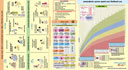
The WHO Child Growth Standards
India - National Workshop on Adoption of New WHO Child Growth Standards
The WHO web site presents
complete information on the WHO Child Growth Standards.
These standards were developed using data collected in the WHO Multicentre Growth Reference Study. The site presents documentation on how the physical
growth curves and motor milestone windows of achievement were developed as well as application tools to support implementation of the standards.
|
 |
Documentation
The following documents describe the sample and methods used to construct the standards and present the final charts.
WHO Child Growth Standards: Methods and development
Acta Paediatrica Supplement
Chart catalogue |
en español
Indicators
The following links provide access to the first and second set of the WHO child growth standards (0-60 months):
:: Length/height-for-age
:: Weight-for-age
:: Weight-for-length
:: Weight-for-height
:: Body mass index-for-age (BMI-for-age)
:: Head circumference-for-age
:: Arm circumference-for-age
:: Subscapular skinfold-for-age
:: Triceps skinfold-for-age
:: Motor development milestones
|
Backgrounders
 |
WHO Child Growth Standards - Methods and
development
Length/height-for-age, weight-for-age, weight-for-length,
weight-for-height and body mass index-for-age
 pdf 26.6 mb - 336 pages pdf 26.6 mb - 336 pages
In 1993 the World Health Organization (WHO) undertook a comprehensive
review of the uses and interpretation of anthropometric references. The
review concluded that the NCHS/WHO growth reference, which had been
recommended for international use since the late 1970s, did not
adequately represent early childhood growth and that new growth curves
were necessary. The World Health Assembly endorsed this recommendation in
1994. In response WHO undertook the Multicentre Growth Reference Study
(MGRS) between 1997 and 2003 to generate new curves for assessing the
growth and development of children the world over.
The MGRS combined a longitudinal follow-up from birth to 24 months and a
cross-sectional survey of children aged 18 to 71 months. Primary growth
data and related information were gathered from 8440 healthy breastfed
infants and young children from widely diverse ethnic backgrounds and
cultural settings (Brazil, Ghana, India, Norway, Oman and USA). The MGRS
is unique in that it was purposely designed to produce a standard by
selecting healthy children living under conditions likely to favour the
achievement of their full genetic growth potential. Furthermore, the
mothers of the children selected for the construction of the standards
engaged in fundamental health-promoting practices, namely breastfeeding
and not smoking. |
 |
Global Strategy for Infant and Young
Child Feeding
WHO - UNICEF
pdf 440 kb - 37 pages
WHO and UNICEF jointly developed the Global Strategy for Infant and Young
Child Feeding to revitalize world attention to the impact that feeding
practices have on the nutritional status, growth and development, health,
and thus the very survival of infants and young children.
The Global Strategy is based on the evidence of nutrition’s significance
in the early months and years of life, and of the crucial role that
appropriate feeding practices play in achieving optimal health outcomes.
Lack of breastfeeding - and especially lack of exclusive breastfeeding
during the first half-year of life - are important risk factors for
infant and childhood morbidity and mortality that are only compounded by
inappropriate complementary feeding. The life-long impact includes poor
school performance, reduced productivity, and impaired intellectual and
social development. |
 |
Management of Severe Malnutrition: A
Manual for Physicians and Other Senior Health Workers
pdf 1.2 mb - 68 pages
Malnutrition remains one of the most common causes of morbidity and
mortality among children throughout the world. Approximately 9% of
children below 5 years of age suffer from wasting (weight-for-height
below 22 standard deviations (,22 SD) of the National Center for Health
Statistics (NCHS)/WHO reference values) and are at risk of death or
severe impairment of growth and psychological development.
This manual is based on The treatment and management of severe
protein-energy malnutrition, which was published by WHO in 1981. Since
then, many advances have been made in the treatment of severe
malnutrition. An improved oral rehydration salts (ORS) solution has been
developed for the treatment of dehydration. Advances in knowledge of the
physiological roles of micronutrients have led to improved dietary
management during the initial phase of treatment. It has been shown that
physical and psychological stimulation, as well as care and affection,
are necessary during the rehabilitation phase in order to prevent
retardation of growth and psychological development.
This manual provides guidelines for the treatment of severely
malnourished children (below 5 years of age) in hospitals and health
centres. The treatment of severely malnourished adolescents and adults is
also briefly considered. The manual is intended for health personnel
working at central and district level, including physicians, nurses,
midwives and auxiliaries. |
 |
Repositioning Nutrition as Central to Development
A Strategy for Large-Scale Action - 2006
pdf 1.6 mb - 272 pages - original at
World Bank site
Persistent malnutrition contributes not only to widespread failure to
meet the first Millennium Development Goal—to halve poverty and
hunger—but also to meet other goals related to maternal and child health,
HIV/AIDS, education, and gender equity. Underweight prevalence among
children is the key indicator for measuring progress on nonincome
poverty, and malnutrition remains the world’s most serious health
problem—as well as the single largest contributor to child mortality.
Nearly one-third of children in the developing world are underweight or
stunted, and more than 30 percent of the developing world’s population
suffers from micronutrient deficiencies. Moreover, new malnutrition
problems are emerging: the epidemic of obesity and diet-related
noncommunicable diseases is spreading to the developing world, and
malnutrition is linked to the HIV/AIDS pandemic.
Repositioning Nutrition as Central to Development: A Strategy for
Large-Scale Action makes the case that development partners and
developing countries must increase investment in nutrition programs. This
case is based on evidence that the scale of the problem is very large and
that nutrition interventions are essential for speeding poverty
reduction, have high benefit-cost ratios, and can improve nutrition much
faster than reliance on economic growth alone. Moreover, improved
nutrition can drive economic growth. The report proposes to the
international development community and national governments a global
strategy for accelerated action in nutrition. |
 |
Counting on Communication: The Uganda Nutrition and
Early Childhood Development Project - 2005 - World Bank Working Paper
No. 59
pdf
3.2 mb - 56 pages - original at
World Bank site
Counting on Communication is part of the World Bank Working Paper series.
These papers are published to communicate the results of the Bank’s
ongoing research and to stimulate public discussion. This publication is
the first in a series of Working Papers sponsored by the Development
Communication Division (DevComm) of the World Bank’s External Affairs
Vice-Presidency. This series is designed to share innovations and lessons
learned in the application of strategic communication in development
projects. Together with other donors, NGOs, and private sector partners,
DevComm seeks to mainstream the discipline of development communication
in development practice.
The Uganda Nutrition and Early Childhood Development Project was one of
DevComm’s first projects to demonstrate the valueadded of strategic
communication. The strategic communication component developed for this
project included the use of formative research about values and attitudes
with respect to child rearing, in order to develop and test effective
messages. The communication strategy was developed in a highly
participatory manner and included nurturing a team of champions for the
project among policymakers, district officials, community leaders, and
grassroots organizations to advocate for the project. It also included
two-way communication activities developed to address the practices and
behaviors that would need to be changed in order for the project to be
successful, rather than merely disseminating messages based on
assumptions of project benefits.
World Bank Working Papers are available individually or by subscription,
both in print and online. |
|
 |
City Initiative for Newborn Health - Mumbai -
Overview and Protocol
A Collaboration Between SNEHA, MCGM, IPU AND ICICI Bank
pdf
732 kb - 34 pages
Goal
To improve the health and survival of mothers and newborn infants in
underprivileged communities in Mumbai.
Purpose
To work with community members in urban slums to achieve improvements in
maternal and newborn care practices and care seeking.
To work with municipal health service providers to strengthen
decentralised primary care:
- To achieve provision of high quality antenatal and postnatal care
at health posts.
- To encourage continuous quality improvement in maternal and
neonatal services at maternity homes and hospitals and along the
referral chain.
To test replicable and scaleable models of interventions to improve
maternal and newborn health.
Methods
The initiative’s primary strategies are to encourage change through
participation, self-sustaining group activities, ownership, and
appreciative inquiry. The first phase of the initiative will run for 4
years. For the purposes of management and evaluation the package will be
organised into three components. Within each component, strategies will
be devised by groups convened to plan interventions to improve maternal
and neonatal health. Intervention will take place at a number of levels,
from community to tertiary.
|
|
 |
Ranchi Low Birth Weight Project - Study Protocol
Reducing Incidence of Low Birth Weight using a Community based Life Cycle
Strategy
Krishi Gram Vikas Kendra, Child In Need Institute, Social Initiatives
Group, ICICI Bank
pdf
805 kb - 16 pages
The Ranchi Low Birth Weight Project is a quasi-experimental action
research study to evaluate the effectiveness of life-cycle based
community level behavioural interventions in reducing the incidence of
low birth weight and improving maternal and child health in Ranchi
district of Jharkhand state in India.
Aims
Low birth weight (LBW) and childhood malnutrition continue to be major
public health problems in India. It is well recognised that maternal and
child health services as well as a range of behavioural factors need to
work synergistically to break the intergenerational cycle of malnutrition
and improve these key indicators which determine long term prosperity and
productivity of a nation. Both on the partners' and other experiences in
India and elsewhere, interventions in the Ranchi LBW project aim to
improve maternal and infant health outcomes by addressing a range of
medico-social and behavioural determinants of low birth weight. The study
envisages implementing and evaluating the additive effects of community
level behavioural interventions in bringing about positive improvements
in maternal and infant health outcomes in an area where mandated public
health and related services are ensured. |
|
 |
Wiesmann, Doris. 2006.
2006 Global
Hunger Index: A Basis for Cross-Country Comparisons. Washington,
DC: International Food Policy Research Institute. - October 13, 2006
The International Food Policy
Research Institute has released its new Global Hunger Index, an
innovative and enhanced approach for measuring hunger in developing and
transitional countries. The index reveals hunger hotspots, shows which
countries and regions have improved over time, and demonstrates the links
between hunger and violent conflict. |
Severe Malnutrition
List of publications
|
|
Management of severe malnutrition: a
manual for physicians and other senior health workers
Geneva, World Health Organization, 1999
Chinese version under preparation. Farsi and Indonesian versions
available in-country.
Cover [pdf 465kb] |
English [pdf 1.46Mb] |
French [pdf 878kb] |
Spanish [pdf 142kb] |
Portuguese [pdf 263kb] |
To order a hard copy |
|
This manual provides expert practical guidelines for the
management of severely malnourished children. Addressed to doctors and other
senior health workers, the manual explains exactly what must be done to save
lives, achieve successful management and rehabilitation, prevent relapse,
and thus give these children the greatest chance of full recovery.
Throughout, the importance of treating severe malnutrition as both a medical
and a social disorder is repeatedly emphasized. As successful management
does not require sophisticated facilities and equipment or highly qualified
personnel, the manual also performs a persuasive function, encouraging
health professionals to do all they can to save these children and meet
their great need for care and affection.
Recommended procedures draw on extensive practical experience as well as
several recent therapeutic advances. These include improved solutions of
oral rehydration salts for the treatment of dehydration, better
understanding of the role of micronutrients in dietary management, and
growing evidence that physical and psychological stimulation can help
prevent long-term consequences of impaired growth and psychological
development. Noting that the physiology of malnourished children is
seriously abnormal, the manual gives particular attention to aspects of
management - whether involving the interpretation of symptoms or the use of
specific interventions - that differ considerably from standard procedures
for well-nourished children. Details range from the reasons why IV infusion
easily causes overhydration and heart failure, through a list of treatments
that have no value and should never be used, to the simple reminder that
underarm temperature is not a reliable guide to body temperature in a
malnourished child during rewarming.
Further practical guidance is provided in eight appendices, which use
numerous tables, charts, sample recording forms, instructions for preparing
feeds, and examples of easily constructed toys to help ensure that
management is thorough, safe, and in line with the latest knowledge. |
Related publications
Management of the child with a serious infection or severe
malnutrition: Guidelines for care at first referral level in developing
countries
Geneva, World Health Organization, 2000
English [pdf 2.2Mb] |
French [pdf 2.3Mb] |
HTML format
Pocket book of hospital care for children: guidelines for the
management of common illnesses with limited resources
Geneva, World Health Organization, 2005
High resolution [pdf 10.3Mb] |
Low resolution [pdf 2 Mb]
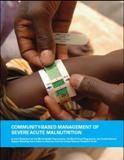
Community-based management of severe malnutrition in
children
In preparation for the joint WHO/SCN/UNICEF Meeting on Community-based
Management of Severe Malnutrition in Children conducted in November 2005, four
background papers were commissioned by the Department of Child and Adolescent
Health and Development and by the Department of Nutrition for Health and
Development of WHO. A fifth paper was written by an NGO. These papers can be
downloaded from this web page. The meeting report and the background paper are
presented by a short introduction paper.
Introduction
Briend A, Prudhon C, Weise Prinzo Z, Daelmans B, Mason J. Putting back
the management of severe malnutrition on the international health agenda
Full text [pdf 46kb]
Meeting report
Proceedings of the WHO, UNICEF and SCN Informal Consultation on
Community-Based Management of Severe Malnutrition in Children
Full text [pdf 556kb]
Background papers
- Myatt M, Khara T, Collins S. A review of methods to detect cases of
severely malnourished children in the community for their admission into
community-based therapeutic care programs
- Ashworth A. Efficacy and effectiveness of community-based treatment
of severe malnutrition
- Collins S, Sadler K, Dent N, Khara T, GuerreroS, Myatt M, Saboya M,
Walsh A. Key issues in the success of community-based management of severe
malnutrition
- Manary M. Local production and provision of ready-to-use
therapeutic food for the treatment of severe childhood malnutrition
- Gatchell V, Forsythe V, Thomas PR. The sustainability of
Community-based Therapeutic Care (CTC) in non-acute emergency contexts
Thanks to an appropriate management scheme, from being severely malnourished
(weight 4.75 kg), this 2-year old girl not only gained 32% more weight in 3
weeks (weight 6.28), but she also gained an appetite for living. |
1. Inpatient treatment of severe malnutrition
Severe malnutrition is defined by a very low weight for height (below -3z
scores of the median WHO growth standards), by visible severe wasting, or by
the presence of nutritional oedema. Decreasing child mortality and improving
maternal health depend heavily on reducing malnutrition, which is
responsible, directly or indirectly, for 54% of the 10.8 million deaths per
year in children under five.
Although the median under-five case-fatality rate for severe malnutrition
typically ranges from 30% to 50%, it can be reduced substantially when
physiological and metabolic changes are taken into account. Rates have
dropped below 5% in treatment centres applying a WHO-recommended scheme for
managing severely malnourished children in hospital settings. In order to
train health workers in applying this scheme WHO has created a course which,
with the aid of institutional partners in Bangladesh, Chile, Gambia, Malawi
and the UK, has been conducted in 25 countries in the African, South-East
Asia and Western Pacific Regions.
::
Training courses |
Inpatient treatment of severe malnutrition
Training courses
Training Course on the Management of Severe Malnutrition in Hospitals
Kabul, Afghanistan, 8 - 19 June 2002
Full text [pdf 128kb]
Training Course on the Management of Severe Malnutrition
Banjul, The Gambia, 25 June - 5 July 2002
Full text [pdf 78kb]
Inter-Country Training Workshop on Management of Severe Malnutrition, ICDDR'B
Hospital
Dhaka, Bangladesh, 11 - 22 December 2002.
Full text [pdf 95kb]
Training Course on the Management of Severe Malnutrition
Blantyre, Malawi, 24 April to 3 May 2003
Full text [pdf 36kb]
Facilitators' Training on the Management of Severe Childhood Malnutrition in
Hospitals
Lusaka, Zambia, 3 - 8 August 2003.
Full text [pdf 19kb]
National Training Course on the Management of Severe Malnutrition
Livingstone, Zambia, 10-17 November 2003
Full text [pdf 54kb]
National Training Course for Improving management of Severe Malnutrition
Maseru, Lesotho, 20 November - 6 December 2003
Full text [pdf 28kb]
Inter-country Training Workshop on Management of Severe Childhood
Malnutrition
National Pediatric Hospital, Phnom Penh, Cambodia, 26 November - 6 December,
2003.
Full text [pdf 212kb]
Training Course on the Management Severe Malnutrition
La Paz, Bolivia, 2-12 February 2004
Full text [pdf 215kb]
National Training Course on the Management of Severe Malnutrition
Mbabane, Swaziland, 9-21 February 2004
Full text [pdf 18kb]
Facilitator Training in the Management of Severely Malnourish Children in
Hospitals
Lahore, Pakistan, 7-10 March 2005
Full text [pdf 63kb]
World Food Programme Presentations
 |
ending child hunger and undernutrition initiative
- Copenhagen, 19 June 2006
overview of issues and moving forward
World Health Organization
Presentation:
flash 785 kb |
powerpoint 2.6 mb |
 |
Ending Child Hunger in India
Partnering with Local Institutions for National Advocacy
World Food Programme
World Health Organization
Presentation:
flash 70 kb |
powerpoint 179 kb |
 |
Providing an 'essential package' for child survival:
WFP and UNICEF in Ethiopia
Government of Ethiopia - World Food Programme - UNICEF
World Health Organization
Presentation:
flash
100 kb |
powerpoint 666 kb |
 |
End Child Hunger and Undernutrition Initiative in
Latin America and the Caribbean
United in the Battle to End Child Hunger - WFP Global Meeting Copenhagen
- June 2006
World Food Programme - UNICEF
World Health Organization
Presentation:
flash 187 kb |
powerpoint 424 kb |
 |
India's Undernourished Children
A Call for Reform and Action
pdf
3.2 mb - 116 pages - original at
World Bank site
Michele Gragnolati; Caryn Bredenkamp; Meera Shekar; Monica Das Gupta;
Yi-Kyoung Lee
Publisher: The
World Bank
Keywords: Nutrition;
Anganwadi; Health; India; Food; ICDS; Child; South Asia; Malnutrition |
The prevalence of child undernutrition in India is among the highest in the
world, nearly double that of Sub-Saharan Africa, with dire consequences for
morbidity, mortality, productivity and economic growth. Drawing on
qualitative studies and quantitative evidence from large household surveys,
this book explores the dimensions of child undernutrition in India and
examines the effectiveness of the Integrated Child Development Services
(ICDS) program, India's main early child development intervention, in
addressing it. Although levels of undernutrition in India declined modestly
during the 1990s, the reductions lagged behind those achieved by other
countries with similar economic growth. Nutritional inequalities across
different states and socioeconomic and demographic groups remain large.
Although the ICDS program appears to be well-designed and well-placed to
address the multi-dimensional causes of malnutrition in India, several
problems exist that prevent it from reaching its potential. The book
concludes with a discussion of a number of concrete actions that can be
taken to bridge the gap between the policy intentions of ICDS and its actual
implementation. |
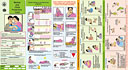
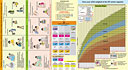
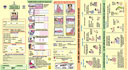
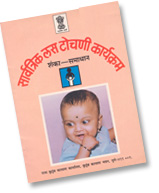
 Mother-Child Protection Card and Guide Mother-Child Protection Card and Guide
Benefiting
- Families / Program participants
- Anganwadi workers of ICDS - Integrated Child Development Schemes
- Nurse midwife
- Supervisors of health and ICDS
This guide book is to be used as a reference book by these functionaries
of health and ICDS to focus on under three. The components are
- Safe Motherhood
- Care of the New born
- Child Growth and Development
- Nutrition
- Immunisation and
- The Importance of the Mother Child Protection Card
Mother-Child Protection Card
|
|

|
Dr. R. K.
Anand's Guide to Child Care is for pregnant
mothers and
parents of infants, young children, and teenagers. A definitive guide to the
parent on pregnancy and childrearing from infancy to the teenage years.
Authored by one of India's foremost paediatricians and an internationally
renowned authority on breastfeeding, the book combines a knowledge of
traditional childrearing practices with the latest medical developments
in child care.
Dr. Anand's Guide to Child Care answers questions such as:
-
Is there a right age to have a baby?
-
What can I do when my baby cries?
-
Can a working mother successfully breastfeed?
-
How helpful is a joint family in bringing up children?
-
How should we handle our fussy eater?
-
Is my child ready for toilet-training?
-
Are vaccines safe?
-
When is the right age for sex education?
-
How can I raise a happy child?
-
Are drugs overprescribed for childhood illnesses?
-
How should we handle our teenager?
-
What should I do in a medical emergency?
|
|

click to enlarge
|
The Management of Diarrhoea and Use of Oral
Rehydration Therapy - Second Edition - A Joint WHO/UNICEF Statement
Audience:
prepared by WHO/UNICEF
1992
30 pages -
pdf 626 kb |
India
|

click to enlarge
|
National Guidelines on Infant and Young
Child Feeding
Audience:
Ministry of Human Resource Development, Department of
Women and Child Development, Food and Nutrition Board, Government of India
August 2004
37 pages -
pdf
936 kb |
|

click to enlarge
|
National Guidelines on Infant Feeding
Audience:
Food and Nutrition Board, Department of Women and Child Development,
Ministry of Human Resources Development, Government of India.
1992
17 pages -
pdf
2.5 mb |
|

click to enlarge
|
Training of Doctors on Nutritional Care
During Diarrhoea
Audience:
National Diarrhoeal Diseases Control & O.R.T.
Programmes
Government of India, Directorate General of Health Services, Ministry of
Health and Family Welfare, New Delhi, India
prepared by the
National Institute of Cholera and Enteric Diseases (ICMR) Calcutta,
India
15 pages -
pdf 780
kb |
|

click to enlarge
|
Policy on Control of Nutritional Anaemia
Audience:
Ministry of Health & Family Welfare, Government of India
January 1991
11 pages -
pdf
1.7 mb |
|

click to enlarge
|
Prevention and Control of Nutritional
Anaemia: A South Asia Priority
Audience:
United Nations Children's Fund - Regional Office for South Asia -
2002
16 pages -
pdf
2 mb |
|

click to enlarge
|
Preventing and
Controlling Iron Deficiency Anaemia Through Primary Health Care
Audience: A Guide for Health Administrators and
Programme Managers
E. M. DeMaeyer
Formerly Medical Officer, Nutrition, World Health Organization,
Geneva, Switzerland
with the collaboration of
P. Dallman, J. M. Gurney, L. Hallberg, S. K. Sood & S. G. Srikantia
1989
61 pages -
pdf
1.7 mb |
|

click to enlarge
|
Diarrhoea - Guide 3
Audience:
Govt. of India, Central Health Education Bureau,
Ministry of health and Family Welfare
May 1984
8 pages -
pdf 2.5 mb |
|

click to enlarge
|
Marathi Cookbook
Iron and Vitamin C Rich Recipes
Gharchya Ghari Anaemia Tala
Audience:
June 2002
67 pages -
pdf
2.8 mb |
|

click to enlarge
|
Management of Critically Sick Child
Audience:
Directorate of Health Services Maharashtra State
Department of Paediatrics, Cama & Albless Hospital, Mumbai
Maharashtra State Health Education Bureau, Aundh, Pune
1997-1998
41 pages -
pdf 9.5
mb |
Vitamin A
Vitamin A: Frequently Asked Questions
- English
Vitamin A:
Frequently Asked Questions - Marathi -
pdf 49 kb
Vitamin A Marathi brochure -
pdf 470 kb
Off-site links
Free Downloads from Hesperian
Hesperian
Home >
Publications and Resources >
Downloads
Hesperian has made a commitment to publish online versions of all of
our books and to keep those online editions up-to-date, incorporating all
corrections and revisions as they are made.
Presently we have materials from the following publications:
Where There Is No Doctor
Where Women Have No
Doctor
Helping Children Who
Are Deaf
We will be posting online versions of all of our publications in the coming
months, so please visit our site [
Downloads ] again soon to see what new resources are
available.
The entire books are now available for download in pdf format
We are happy to have other organizations link to our online
publications, but in order to prevent out-of-date or altered editions of our
publications from being accessed online, we do not allow Hesperian
publications to be posted on other sites without our explicit permission.
Where There Is No Doctor
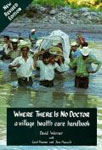 |
Where There Is No Doctor
A village health care handbook
by David Werner with Carol Thuman and Jane Maxwell
Updated 2003 - 512 pages, illustrated - English ed. ISBN: 0-942364-15-5
Hesperian's classic manual, Where There Is No Doctor, is perhaps the most
widely used health care manual for health workers, clinicians, and others
involved in primary health care delivery and health promotion programs
around the world. With millions of copies in print in more than 70
languages, the book is an irreplaceable health resource in communities
worldwide.
As with all Hesperian books, the manual provides practical, easily
understood information on how to diagnose, treat, and prevent common
diseases. Special attention is focused on nutrition, infection and
disease prevention, as well as the use of diagnostic techniques as
primary ways to prevent and treat health problems.
The entire book is now available for download in pdf format
To buy the complete book, visit our
online store |
-
Front matter: Cover, How to Use This Book, Acknowledgements
-
Table of Contents: Introduction, Note About This New Edition
-
Brown Pages: Words To The Village Health Worker
-
Chapter 1: Home Cures and Popular Beliefs
-
Chapter 2: Sicknesses that are Often Confused
-
Chapter 3: How to Examine a Sick Person
-
Chapter 4: How to Take Care of a Sick Person
-
Chapter 5: Healing Without Medicines
-
Chapter 6: Right and Wrong Use of Modern Medicines
-
Chapter 7: Antibiotics: What They Are and How To Use Them
-
Chapter 8: How To Measure and Give Medicine
-
Chapter 9: Instructions and Precautions for Injections
-
Chapter 10: First Aid
-
Chapter 11: Nutrition: What to Eat to Be Healthy
-
Chapter 12: Prevention: How to Avoid Many Sicknesses
-
Chapter 13: Some Very Common Sicknesses
-
Chapter 14: Serious Illnesses That Need Special Medical Attention
-
Chapter 15: Skin Problems
-
Chapter 16: The Eyes
-
Chapter 17: The Teeth, Gums, and Mouth
-
Chapter 18: The Urinary System and the Genitals
-
Chapter 19: Information for Mothers and Midwives
-
Chapter 20: Family Planning- Having the Number of Children You Want
-
Chapter 21: Health and Sicknesses of Children
-
Chapter 22: Health and Sicknesses of Older People
-
Chapter 23: The Medicine Kit
-
The Green Pages: The Uses, Dosage, and Precautions for Medicines
-
The Blue Pages: New Information
-
Vocabulary: Explaining Difficult Words
-
Information: Addresses for Teaching Materials, Dosage Blanks, Patient
Report, Information on Vital Signs, Abbreviations, Weight, Volume
-
Index (Yellow Pages)
Where Women Have No Doctor
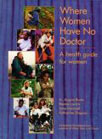 |
Where Women Have No Doctor
A health guide for women
by A. August Burns, Ronnie Lovich, Jane Maxwell, and Katharine Shapiro
paperback - 596 pages, illustrated - English ed. ISBN: 0-942364-25-2
Where Women Have No Doctor combines self-help medical information with
the tools for organizing against the poverty and discrimination that
impacts women's health and access to medical care. The first
community-based health book for women, Where Women Have No Doctor serves
as an essential resource for any woman or girl wanting to improve her
health. Developed with the help of community-based groups, village health
workers, and women's health experts in more than 30 countries, the manual
gives treatment information for many health problems that affect only
women or affect women differently from men. Topics covered include: ways
to stay healthy; understanding the reproductive parts of women's bodies;
mental health; politics of women's health; nutrition; pregnancy, birth,
and breastfeeding; HIV/AIDS and other STI's; rape and violence against
women; health concerns of girls, women with disabilities, refugee women,
and older women; how to use medicines safely. Click here to see the
complete table of contents.
The entire book is now available for download in pdf format
To buy the complete book, visit our
online store |
WHO Resources
Nutrition for Health and Development (NHD)
Reproductive Health and Research (RHR
UNAIDS
General
-
The international code of marketing of breast-milk substitutes. Frequently
asked questions
ISBN 92 4 159429 2
-
Community-based management of severe malnutrition in children
-
UNICEF and WHO joint statement on HIV and infant feeding
-
Feeding the non-breastfed child 6-24 months of age
WHO/FCH/CAH/04.13
-
Implementing the Global Strategy for Infant and Young Child Feeding:
Report of a technical meeting
ISBN 92 4 159120 X
-
Community-based strategies for breastfeeding promotion and support in
developing countries
ISBN 92 4 159121 8
-
Global Strategy for Infant and Young Child Feeding
-
Breastfeeding and maternal medication:
Recommendations for drugs in the eleventh WHO model list of essential
drugs
-
Complementary feeding: Report of the Global Consultation, and Summary of
Guiding Principles for complementary feeding of the breastfed child
WHO, CAH
[PDF], 1.193 MB
-
Guiding principles for
complementary feeding of the breastfed child
WHO, PAHO |
English
pdf, 6.162 mb |
Spanish
pdf, 1.078 mb
-
Guiding principles for feeding non-breastfed children 6-24 months of age
ISBN 92 4 159343 1 |
English and French versions
-
WHO, UNICEF, the International Committee of the Red Cross and the International Federation of Red Cross and Red
Crescent Societies call for support for appropriate infant and young child
feeding in the current Asian emergency, and caution about unnecessary use
of milk products
HTML,
12 KB,
pdf,
256 kb
-
Should adolescents be specifically targeted for nutrition in developing
countries? To address which problems, and how?
-
Nutrient adequacy of exclusive breastfeeding for the term infant during
the first six months of life
-
The optimal duration of exclusive breastfeeding. Report of an expert
consultation
WHO/FCH/CAH/01.24
-
The optimal duration of exclusive breastfeeding. A systematic review
WHO/FCH/CAH/01.23
-
Statement on the effect of breastfeeding on mortality of HIV-infected
women
-
Complementary feeding: Family foods for breastfed children
WHO/FCH/CAH/00.6
-
Special Supplement of the Food and Nutrition Bulletin
2003, 24(1) -
pdf, 1.660 mb
-
Technical consultation.
HIV and infant feeding: Implementation of Guidelines
WHO/CHD/98.15
-
Evidence for the Ten Steps to Successful Breastfeeding
WHO/CHD/98.9
English, French and Spanish versions
-
Complementary feeding of young children in developing countries: A review
of current scientific knowledge
WHO/NUT/98.1
-
Breastfeeding and maternal tuberculosis
UPDATE, N 23 February 1998
-
Breastfeeding and the use of water and teas
UPDATE, N 9 November 1997
-
Not enough milk
UPDATE, N 21 March 1996
-
Hepatitis B and breastfeeding
UPDATE, N 22 November 1996
-
Breastfeeding counselling: A training course
UPDATE, N 14 August 1994
-
Contaminated food: A major
cause of diarrhoea and associated malnutrition among infants and young
children
-
Breastfeeding: The
technical basis and recommendations for action
WHO/NUT/MCH/93.1
-
Recommended length of
exclusive breastfeeding, age of introduction of complementary food and the
weaning dilemma
WHO/CDD/EPD/92.5
-
Savage King, F. Helping
Mothers to Breastfeed
1992
Planning
-
Planning Guide for national implementation of the Global Strategy for
Infant and Young Child Feeding
Working draft
-
Update on dissemination and use of new and revised HIV and Infant Feeding
publications
August 2004 - July 2005
pdf, 138 kb
-
HIV and Infant Feeding generic slide set
-
HIV and Infant Feeding: Framework for Priority Action
English, French, Spanish, Chinese and Portuguese versions
-
HIV transmission through breastfeeding. A review of available evidence
ISBN 92 4 159271 4 |
English, French and Spanish versions
-
HIV and Infant Feeding. Guidelines for decision-makers
ISBN 92 4 159122 6 |
English, French and Spanish versions
-
HIV and Infant Feeding. A guide for health-care managers and supervisors
ISBN 92 4 159123 4 |
English, French and Spanish versions
-
What are the options?
Using formative research to adapt global recommendations on HIV and infant
feeding to the local context
ISBN 92 4 159136 6
-
Infant and Young Child Feeding
A tool for assessing national practices, policies and programmes
-
HIV and infant feeding
WHO/FRH/NUT/CHD/98.1-3
Guidelines and Training
-
HIV and infant feeding counselling job aids
-
Mastitis. Causes and management
WHO/FCH/CAH/00.13 |
English, French, Spanish and Russian versions
-
HIV and infant feeding counselling: A training course
WHO/FCH/CAH/00.2-4 |
English, French, Spanish and Russian versions
-
Relactation. A review of experience and recommendations for practice
WHO/CHS/CAH/98.14
English, French and Spanish versions
-
Persistent diarrhoea and breastfeeding
WHO/CHD/97.8
-
Hypoglycemia of the newborn. Review of the literature
WHO/CHD/97.1
-
Breastfeeding counselling: A training course
WHO/CDR/93.3-5 -
English, French, Spanish and Russian versions
Monitoring and Evaluation
Research
-
HIV and Infant Feeding Counselling. From research to practice
Meeting report |
WHO/FCH/CAH/05.10
-
HIV and Infant Feeding data analysis
Workshop report |
WHO/FCH/CAH/04.9
-
Breastfeeding and replacement feeding practices in the context of
mother-to-child transmission of HIV
WHO/CAH/01.21
-
New data on the prevention of mother-to-child transmission to HIV and
their policy implications
Geneva, October 2000
Other Resources
FAO - Download
Assessment of the
double burden of malnutrition in six case study countries
pdf, zipped, 2.1 mb
Asia: India: Education. Nationmaster. 26 Aug. 2005. Wikipedia Encyclopedia.
30 Aug. 2005
Bridging
The Nutritional Divide. Swaminathan, M.S. The Little Magazine. 17th
International Congress on Nutrition, Vienna, August 2001.
India Child Malnutrition Deaths. Chadha, Monica. BBC News, Mumbai. 27 Aug. 2005
Chronic
Hunger and the Status of Women in India. Coonrod, S. Carol. The Hunger Project. 8 Aug. 2005
Demographics of India. Nationmaster. 26 Aug. 2005. Wikipedia Encyclopedia. 30 Aug. 2005
Detailed Facts and Statistics about India. Phrasebase. 2005. Phasebase. 26 June, 2005
Hunger Amidst Plenty. Dreze, Jean. India Together. Dec. 2003. Humanscape. 25 June 2005
Early Years. UNICEF. 6 Aug. 2005
Chronic Hunger and Obesity Epidemic. Gardner, Gary. Worldwatch Organization. 2 Aug. 2005
The Asian Diet Pyramid. Gifford, K. Oldways. Oldways Preservation & Exchange Trust. 20 June 2005
India has an Enormous Under-Nutrition and Over-Nutrition Problems. Haddad,
Dr. Lawrence. 29 June, 2005
India: Latest. UNICEF. 30 June 2005
Child
Malnutrition: Myths and Solutions. Kumar, A.K. Shiva. The Little Magazine. UNICEF. 27 June 2005
Child Nutrition in India. Mishra, Vinod. East-West Center. National Family
Health Survey Subjects Reports. 30 June 2005
Food Fight For Hunger. Prasenjit Maiti. Council for Development Studies. 4 Aug. 2005
Family Life: India. Rajani, Chetan. The Settlement Organization. Cultural Profiles Project. 30 June 2005
SC Rules on Preventing Starvation Deaths. India Together. Right to Food litigation. 27 Aug. 2005
The Plight of Children in India. Statesman. Food Relief. Bhaktivedanta International Charities. 15 Aug. 2005.
Women’s Education Can Improve Child Nutrition in India. National Family
Health Survey Bulletin. Feb. 2000. International Institute for Population Sciences Mumbai.
World Hunger Awareness
Global Database
on Child Growth & Malnutrition (FAO)
Food Security Statistics (FAO)
Information on Vegetarian & Vegan Diets (PCRM)
Malnutrition Matters
Malnutrition (WikiPedia)
Malnutrition (WHO)
Nutrition Publications (WHO)
Physicians Committee for Responsible Medicine (PCRM)
Repositioning Nutrition as Central to Development: A Strategy for Large Scale Action (World Bank)
UN Millennium Development Goals
Women - The key to ending hunger (The Hunger Project)
World Hunger Map: [Asia]
[Latin
America & Caribbean] [Middle
East, Central Asia, Eastern Europe] [West
Africa] [Southern
Africa] [East
& Central Africa]

|
To view and print the pdf files that are available for download from our site, you can use the Free Adobe Reader.
Please visit
adobe.com
for free downloading of the Acrobat Reader. |
02 January, 2009
|